Allowable Expenses Self Employed UK — What You Can Claim
Every allowable expense you claim reduces your taxable profit — and therefore the tax you pay. But claim the wrong thing and HMRC can disallow it. This allowable expenses self employed UK guide explains what self-employed people in the UK can claim in 2025/26, the flat rates that make it simple, and what you cannot claim.
The one rule: wholly and exclusively
HMRC allows an expense only if it was incurred wholly and exclusively for your business. If a cost has a personal purpose too, you can usually claim only the business share — and you need evidence for how you worked it out.
Example: a laptop you use only for client work is fully allowable. A laptop you also use for films in the evening is not — claim the business proportion only, and keep a note of how you calculated it.
Allowable expenses self employed UK — what you can usually claim
| Category | Examples |
|---|---|
| Office costs | Stationery, printer ink, postage, software subscriptions, phone and broadband (business share) |
| Stock and materials | Goods you buy to sell, or raw materials you use to make what you sell |
| Travel | Business journeys — fuel, parking, train, bus and air fares, hotels (not your normal commute) |
| Premises | Rent, business rates and utilities for separate business premises |
| Staff and subcontractors | Wages, subcontractor payments, agency fees |
| Insurance | Business, public liability and professional indemnity cover |
| Professional fees | Accountant and legal fees for your trade, professional subscriptions |
| Marketing | Advertising, website hosting and costs, business cards |
| Financial costs | Business bank charges, interest on business loans |
| Training | Courses that update or expand skills you already use in your business |
| Work clothing | Uniforms and protective clothing only |
Working from home — two ways to claim
Option 1: HMRC simplified flat rate. No receipts needed for the flat rate itself. You must work at least 25 hours a month from home.
| Hours worked from home per month | Flat rate per month |
|---|---|
| 25 to 50 hours | £10 |
| 51 to 100 hours | £18 |
| 101 hours or more | £26 |
The flat rate covers heat, light and power. Phone and internet are claimed separately, based on business use.
Option 2: actual costs. Work out the business proportion of your household costs (heating, electricity, broadband, council tax) based on rooms used and time spent working. This can be worth more than the flat rate if you work from home a lot, but you need records to back it up.
Vehicle and travel — the 45p rule
For cars and vans, the simplified mileage rate for 2025/26 is 45p per mile for the first 10,000 business miles in the tax year, then 25p per mile after that. Motorcycles are 24p a mile, bicycles 20p a mile.
That rate covers fuel, insurance, servicing, road tax and depreciation in one figure — if you use it, you cannot claim those costs separately for the same vehicle.
Latest change to know: the car and van rate rises to 55p per mile for the first 10,000 miles from April 2026 (the 2026/27 tax year). For the return due 31 January 2027, which covers 6 April 2025 to 5 April 2026, use 45p.
You cannot claim travel to a regular workplace — that is ordinary commuting, not a business journey. Travel to clients, suppliers and temporary work locations is allowable.
Bigger purchases — capital allowances
Day-to-day costs are deducted straight away. Bigger, lasting assets — a laptop, a van, machinery — go through capital allowances instead. The Annual Investment Allowance is £1 million for 2025/26, so most self-employed people can deduct the full cost of qualifying equipment in the year they buy it.
The £1,000 trading allowance
If your total expenses are under £1,000, you can claim the £1,000 trading allowance instead of adding up your actual expenses. You cannot claim both — it is one or the other. For many people with small side income, the allowance is simpler and worth more than their real expenses.
What you cannot claim
- Everyday clothing, even if you only wear it for work
- Client entertainment — entertaining clients is not allowable
- Fines and penalties
- Your own meals on a normal working day (meals on an overnight business trip are different)
- Personal costs, or the personal share of a mixed cost
- The cost of your own time
Staff entertainment is different: up to £150 per person per year is allowable.
How much does claiming save you?
Expenses do not reduce your tax bill pound for pound — they reduce the profit your tax is calculated on. At the 20% basic rate, £1,000 of allowable expenses saves about £200 in Income Tax, plus Class 4 National Insurance on top. At the 40% higher rate, the same £1,000 saves about £400.
Worked example: turnover £40,000, allowable expenses £8,000. Taxable profit is £32,000, not £40,000. Income Tax on £32,000 (after the £12,570 Personal Allowance) is £3,886, instead of £5,486 on £40,000 — a saving of £1,600, before National Insurance savings.
What records to keep
Keep receipts, invoices, bank statements and mileage logs for at least five years after the 31 January deadline for that tax year. For 2025/26, that means keeping records until at least 31 January 2032.
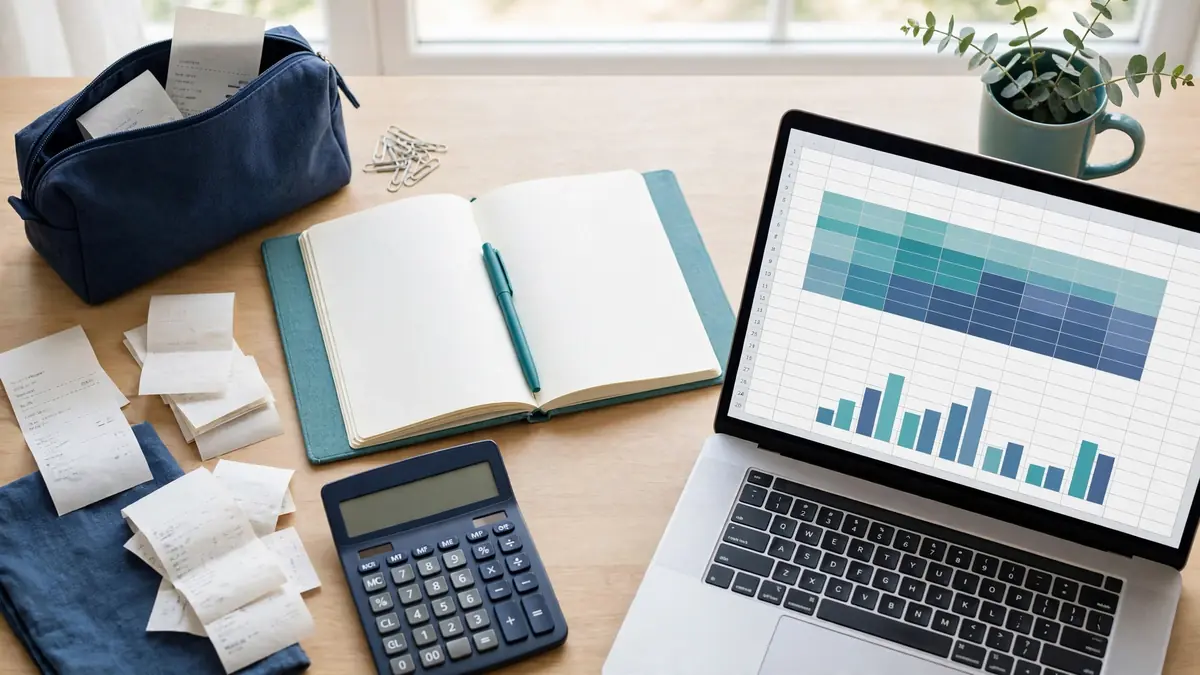
Keep a simple system: photograph receipts as you get them, log business miles on the day, and keep business and personal spending in separate accounts if you can.
What to check now
- Add up your expenses for 2025/26 — are they over £1,000, or is the trading allowance better?
- Check your mileage log — are you claiming 45p a mile for 2025/26?
- If you work from home, compare the £10/£18/£26 flat rate with your actual costs.
- Keep every receipt — no receipt, no claim, in practice.
Frequently asked questions
What is the wholly and exclusively rule?
An expense must be incurred wholly and exclusively for your business. Mixed costs can be claimed for the business share only.
Can I claim 45p a mile?
Yes, for 2025/26 — 45p for the first 10,000 business miles, 25p after. From April 2026 the first-10,000 rate rises to 55p.
Can I claim working from home costs?
Yes — either HMRC’s flat rate (£10, £18 or £26 a month depending on hours) or the business proportion of your actual household costs.
Can I claim my everyday clothes?
No. Only uniforms and protective clothing are allowable.
Should I use the £1,000 trading allowance or claim actual expenses?
Whichever is higher. If your real expenses are under £1,000, the allowance usually wins — but you cannot claim both.
This article gives general information about UK tax, not personal financial or tax advice. Tax rules can change, and your situation may be different. Check GOV.UK or speak to a qualified accountant before you act.